Orthodontic treatment has advanced significantly, offering patients more choices than ever when it comes to improving bite alignment and straightening their teeth. Among the most common options, traditional braces and Invisalign are frequently recommended by dental professionals for different clinical situations. Each system uses a unique technique to guide teeth into their desired position over time. Understanding how these treatments differ can help patients understand which option may be more appropriate for them.
A common question patients ask is, “Are traditional braces better than Invisalign?”—but the answer depends on several personal and clinical factors. This blog will explore the key differences between these two treatment types, outlining their respective benefits and limitations. We’ll also explain why a personalised assessment is essential before choosing a treatment plan. Rather than promoting one option, our goal is to present balanced, factual information to help patients make confident, evidence-based treatment choices.
Summary of the Content:
- Braces use wires and brackets to apply continuous pressure that gradually moves teeth into alignment. They require regular dental visits for adjustment.
- Invisalign uses clear, removable aligners that are custom-made to shift teeth over time. Each aligner is worn for about one to two weeks before moving to the next stage.
- Braces are more visible, while Invisalign aligners are designed to be less noticeable. However, visibility may vary depending on materials, lighting, and treatment complexity.
- Invisalign can be removed during meals and for brushing, supporting easier oral hygiene. Braces require careful cleaning around wires and brackets to prevent plaque buildup.
- Braces are often suitable for complex orthodontic cases needing precise control. Invisalign is commonly used for mild to moderate alignment issues, as assessed by your dentist.
- Treatment time varies for both options and depends on individual needs and compliance. Only a qualified dental professional can recommend the most appropriate option.
Understanding the Two Orthodontic Treatment Options
Orthodontic treatments like braces and Invisalign help improve dental alignment, but they work in different ways. Understanding how each option functions can support informed, personalised treatment decisions. If you’re wondering, “Are traditional braces better than Invisalign?”, the answer depends on your unique needs and goals. This section outlines the key features of both options to help guide your discussion with a qualified dental professional.
What Are Traditional Braces?
Traditional braces are fixed orthodontic appliances made up of small brackets attached to each tooth and connected by an archwire. These brackets are commonly made from stainless steel or ceramic materials, depending on the patient’s aesthetic preferences. The archwire applies controlled pressure to shift teeth into better alignment over time. Small elastic bands or modules may also be used to assist with specific movements or to stabilise the archwire.
Throughout treatment, patients attend regular adjustment appointments where the dentist modifies the wire or elastics to continue guiding tooth movement. These adjustments are scheduled every four to eight weeks, depending on individual treatment plans. Traditional metal braces can be used to address a range of orthodontic issues, including spacing, crowding, and bite irregularities. The duration of treatment varies for each person and depends on the complexity of the case and patient compliance.
What Is Invisalign?
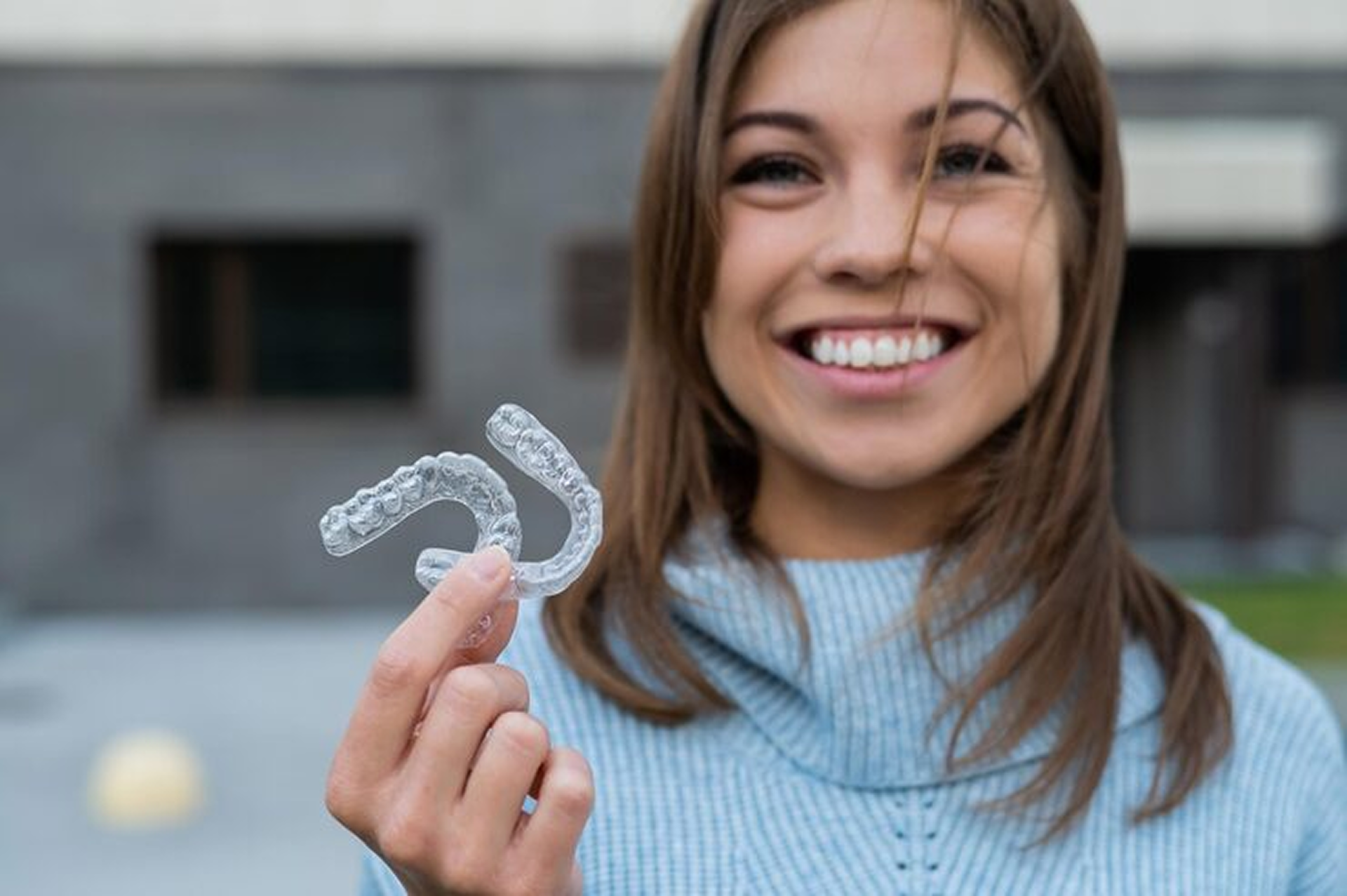
Invisalign is an orthodontic treatment that uses a series of custom-made, clear plastic aligners to gradually guide teeth into their desired position. Each aligner is fabricated using 3D imaging technology based on your dentist’s treatment plan and dental impressions. Patients typically wear each set of aligners for one to two weeks before switching to the next stage. For effective results, aligners should be worn for 20-22 hours per day, including during sleep.
These aligners are designed to be less noticeable than traditional braces and can be removed during meals or oral hygiene routines. The flexibility of removing aligners allows for easier brushing and flossing compared to fixed braces. However, consistent daily wear is essential to avoid delays in treatment progress or outcomes. Only a qualified dental practitioner can determine if Invisalign is appropriate based on your oral health and orthodontic needs.
Key Differences Between Dental Braces and Invisalign Clear Aligners
Choosing between braces and Invisalign involves understanding how each option suits different needs, preferences, and treatment goals. This section outlines practical distinctions to help patients choose the most suitable option in consultation with a dental professional. Clinical suitability, maintenance, comfort, and visibility may vary depending on individual circumstances and treatment plans.
Appearance
Traditional braces are generally more visible due to their metal or ceramic brackets attached to the front of the teeth throughout treatment. These brackets and wires are fixed in place, making them noticeable when smiling or speaking. Invisalign aligners, made from clear plastic, are designed to fit snugly over the teeth and appear less prominent. While Invisalign may be less noticeable, visibility can still vary depending on lighting, alignment complexity, and patient compliance with wear instructions.
Comfort and Adjustments
Braces and Invisalign require periodic adjustments, which may lead to temporary discomfort as teeth gradually shift into their proper positions. Braces can sometimes irritate the inner cheeks or lips due to contact with metal brackets or wires. Invisalign aligners may initially feel tight or create mild pressure when a new set is introduced. Patients typically adapt over time, but any persistent discomfort should be discussed with a dental professional for tailored advice.
Treatment Scope
Traditional braces are often recommended for complex orthodontic cases, such as severe crowding, large gaps, or significant bite misalignments, due to their precise control. Invisalign is suitable for many mild to moderate alignment issues, but may not be ideal for more complex tooth movements or jaw discrepancies. While Invisalign technology has advanced, it still may not achieve the same results as braces in some clinical situations. A thorough assessment is essential to determine the most appropriate treatment based on your orthodontic needs.
Maintenance and Dental Hygiene
Maintaining oral hygiene with traditional braces involves careful brushing around brackets and wires using a soft toothbrush and interdental brushes or floss threaders. Patients should clean their teeth after every meal to prevent plaque buildup and reduce the risk of gum disease or decay. Invisalign aligners must be removed before drinking anything other than water or eating to avoid staining and bacterial growth. Aligners should be rinsed and gently brushed with a soft toothbrush daily, then stored in a clean case when not in use.
Treatment Time
The average treatment time for traditional braces typically ranges from 18-36 months, depending on case complexity and how well patients follow instructions. Invisalign treatment may take between 12 and 24 months, but this also varies with the severity of misalignment and patient compliance. Some patients may complete treatment sooner or require additional time due to missed appointments or inconsistent appliance use. A dental professional can provide a tailored estimate based on your treatment goals and unique oral health needs.
Pros and Limitations
When considering orthodontic treatment, traditional braces and Invisalign offer distinct benefits and limitations. The table below provides a clear, side-by-side comparison of each option to support informed decision-making. This comparison is intended to assist patients in understanding key differences; however, a professional consultation is essential for personalised treatment advice.
| Treatment Factor | Traditional Braces | Invisalign |
| Effectiveness | • Suitable for complex cases • Fixed for consistent force • Works for bite adjustment | • Effective in addressing mild to moderate alignment issues • May not suit all bite issues • The dentist must assess suitability |
| Appearance | • Visible brackets and wires • Ceramic option is less noticeable | • Clear, nearly invisible aligners • Preferred for a discreet look |
| Maintenance & Hygiene | • Requires cleaning around brackets • Risk of plaque if not cleaned well | • Remove for brushing and meals • Must clean aligners daily |
| Lifestyle & Comfort | • Can’t remove for eating • May cause mouth irritation | • Removable for meals • Tightness is common at the start |
| Appointments & Cost | • Regular in-clinic adjustments • Cost varies by case and materials | • Fewer visits in some cases • May incur additional costs for refinements |
Choosing between braces and Invisalign involves several considerations, including treatment complexity, lifestyle preferences, and long-term goals. A consultation with a dentist is essential to assess individual suitability and to discuss the most appropriate treatment options.
Factors to Consider When Choosing
When deciding between traditional braces and Invisalign treatment, there are several important factors to consider. Each orthodontic treatment has unique advantages and limitations that may be more suitable depending on your specific needs, goals, and lifestyle. Below is a clear breakdown of key considerations to help guide your decision-making process:
- Complexity of Your Orthodontic Issues:
Some orthodontic issues, such as severe crowding, bite problems, or complex tooth movement, may require traditional braces for effective treatment. Traditional metal braces offer more precise control over tooth alignment in complex cases, using metal brackets and wires to move teeth into the desired position. - Appearance and Aesthetic Preferences:
Invisalign aligners are custom-made from clear plastic, offering a discreet orthodontic treatment option for those seeking an alternative to traditional braces. They are often chosen by adult patients and teenagers who prioritise appearance during their orthodontic treatment journey. Traditional braces, including ceramic braces or lingual braces, offer alternative types of braces that may be less noticeable than metal options. - Lifestyle and Dietary Restrictions:
Invisalign trays can be easily removed before eating or drinking, allowing patients to consume a wider range of foods without the risk of damaging brackets and wires. In contrast, metal braces come with dietary restrictions to avoid sticky foods or hard items that may damage the appliance. - Oral Hygiene Maintenance:
Oral hygiene is often easier to maintain with Invisalign, as the aligners can be removed for brushing and flossing. Traditional braces require careful cleaning around brackets and wires to prevent staining, plaque buildup, and cavities, making dental hygiene more challenging for some patients. - Patient Compliance and Discipline:
Invisalign treatment requires patients to wear the aligners for 20–22 hours per day to work effectively. This requires a high level of discipline and commitment. Unlike braces, which are fixed in place, the effectiveness of clear aligners is directly impacted by how consistently the aligners are worn. - Comfort and Sensitivity:
Invisalign and traditional braces can cause some discomfort as teeth begin to move. Metal wires and brackets may irritate the inner cheeks or lips, while Invisalign aligners may create pressure when trays are changed every few weeks. However, some patients find that Invisalign offers better comfort due to the smooth plastic design. - Treatment Duration and Appointments:
Treatment time can vary based on the patient’s compliance and the severity of the dental issues. In general, traditional braces are recommended for more complex cases and may require more frequent adjustments. Invisalign treatment often involves regular checkups to monitor progress, with fewer unexpected visits as there are no brackets or wires that can break. - Budget and Cost Considerations:
The cost of Invisalign can vary depending on the treatment plan, the number of aligner trays required, and additional costs such as retainers. Traditional metal braces may be more cost-effective for some patients, especially when addressing extensive or long-term orthodontic issues. Your dentist will provide a transparent quote based on your unique needs. - Age and Lifestyle Factors:
Invisalign is commonly chosen by adult patients who seek a discreet option that fits into their professional or social lifestyle. Metal braces remain a common choice for teenagers, as they may be less likely to comply with removable trays and benefit from fixed braces treatment. - Professional Assessment Is Essential:
Ultimately, the decision between braces and Invisalign should be made in consultation with a dental professional. They will assess your oral health, bite alignment, and treatment goals to recommend the most suitable option for straighter teeth and long-term dental health.
Each orthodontic treatment—whether traditional braces or Invisalign—has its own set of benefits and limitations. By considering factors such as appearance, oral hygiene, treatment complexity, and lifestyle, you can choose the most suitable treatment option in consultation with your dentist.
Professional Assessment Is Essential
When considering orthodontic treatment, it’s essential to recognise that only a qualified dental professional can determine whether traditional braces or Invisalign is appropriate for your needs. Here’s why a professional assessment is an essential first step:
- Comprehensive Oral Health Evaluation:
A dental professional will examine your teeth, gums, and overall oral health to identify any underlying conditions that may affect orthodontic treatment. Issues such as gum disease or tooth decay must be managed before starting any orthodontic procedure. - Detailed Assessment of Bite and Alignment:
Your dentist will analyse how your upper and lower teeth come together (your bite) and assess the alignment of individual teeth. This helps determine the type and complexity of movement required, which can influence whether braces or Invisalign is suitable. - Customised Treatment Planning:
Orthodontic treatment is not one-size-fits-all. A professional consultation allows for the development of a personalised treatment plan tailored to your goals, dental structure, and lifestyle. - Diagnostic Imaging and Records Are Essential:
Your dental practitioner may take X-rays, photographs, and digital scans to get a full picture of your jaw, tooth roots, and surrounding bone. These diagnostic tools are essential for planning effective and safe treatment. - Evaluation of Suitability and Limitations:
Not all patients are suitable for every type of orthodontic appliance. For example, complex tooth movements may require braces, while mild to moderate misalignment might be effectively addressed with clear aligners. Only a dentist can assess which option is most appropriate based on clinical findings. - Discussion of Compliance and Lifestyle Factors:
Invisalign requires a high level of patient compliance for successful results. A dentist will discuss your daily habits, work routine, and ability to maintain aligner wear schedules to evaluate if this treatment is practical for you.
A consultation with a qualified dental practitioner is the only reliable way to determine which orthodontic treatment—if any—is right for you. This supports the delivery of safe, effective care based on a thorough understanding of your oral health.
Final Thoughts
“Are traditional braces better than Invisalign?” The answer depends on each patient’s dental condition, lifestyle preferences, and treatment goals, which can vary significantly between individuals. Traditional braces are often used for complex cases requiring precise, controlled tooth movements over time. Invisalign may suit patients seeking a more discreet option for mild to moderate alignment concerns. The most suitable choice should always follow a thorough clinical evaluation by a qualified dental professional.
At Willeri Dental Parkwood, we carefully assess your bite, alignment, and oral health to recommend a treatment plan tailored to your needs. Both Invisalign and braces have advantages and limitations that should be discussed openly during your consultation. Our team provides personalised guidance based on your oral health rather than offering generalised options. For clear advice about which orthodontic option is most suitable for your needs, consider booking a consultation with our experienced team.