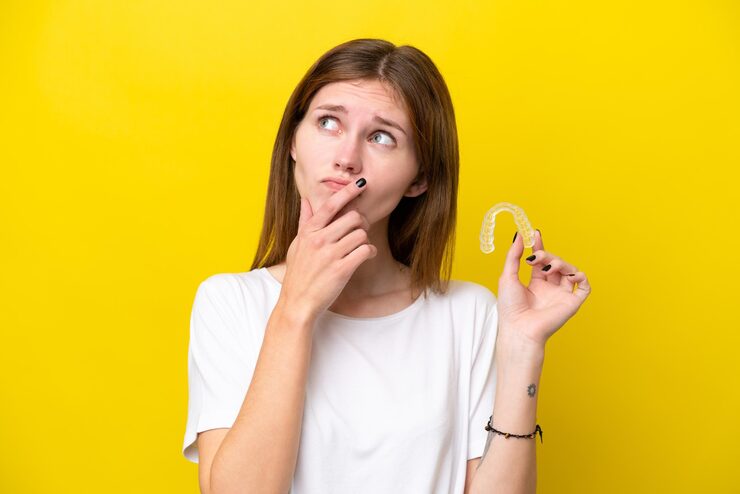
You’ve completed your Invisalign®® treatment, and your smile looks fantastic—congratulations on reaching this milestone. Many patients feel excited about their results and naturally want them to last. However, retainers after Invisalign® are commonly recommended as an important part of orthodontic retention protocols to help maintain treatment results.
There’s a biological reality that applies to everyone: teeth naturally shift throughout life. This tendency continues even after orthodontic treatment ends, making retention an essential part of maintaining your results. Without retention, teeth may gradually shift over time, though individual outcomes vary based on multiple factors.
In this blog, we’ll explore the science behind why teeth shift, the retention protocols many orthodontic professionals recommend, and what happens without consistent retainer wear. You can expect retention to be a long-term commitment, though the intensity decreases significantly over time. This is standard practice in orthodontics worldwide, designed to help you maintain the orthodontic results you’ve worked hard to achieve.
Summary of the Content:
- Teeth naturally shift after orthodontic treatment due to periodontal ligament memory and bone remodelling processes.
- Retainers are designed to help maintain teeth in their new positions during the stabilisation phase, though individual responses vary.
- Many orthodontic professionals recommend a phased retention approach: initial full-time wear, transitioning to nighttime-only wear, then long-term maintenance retention.
- Clear retainers, Hawley retainers, and fixed retainers each offer distinct advantages depending on individual needs, treatment complexity, and lifestyle factors.
- The initial retention phase usually requires full-time wear of orthodontic retainers for several months, when teeth are vulnerable to movement.
- Long-term retention often means indefinite nighttime retainer wear several nights a week to maintain optimal alignment as you age.
- Proper retainer care—including daily cleaning habits and proper storage practices—extends retainer lifespan and protects oral health.
- Following your dental professional’s specific retention recommendations may help support long-term alignment, though individual results vary.
The Science Behind Tooth Movement After Invisalign® Treatment
Teeth commonly have a tendency to shift after orthodontic treatment due to biological factors, though the degree varies between individuals. This happens because of the periodontal ligament—connective tissue with “memory”—and ongoing bone remodelling processes that continue for months post-treatment. Think of it like an elastic band that’s been stretched: it naturally wants to return to its original shape. This shifting tendency is a normal biological process affecting all orthodontic patients, not a treatment failure, which is why retention is universally recommended.
Why Teeth Shift: Understanding Periodontal Ligaments
The periodontal ligament is connective tissue that anchors your teeth in the jawbone, functioning like flexible shock absorbers during normal activities. Orthodontic treatment stretches and repositions these ligaments, but they retain “memory” of their original configuration for extended periods. Adaptation timeframes vary considerably between individuals, with some dental professionals suggesting 6-12 months or longer as general guidelines, though individual stabilisation depends on multiple factors.
During this vulnerable period, teeth can shift rapidly without retainer support, holding teeth in their desired position. Some patients may experience tooth movement if retainer wear is discontinued during the early retention phase, though individual responses vary. This is why your dentist will emphasise the importance of consistent wear during the initial retention phase.
The Bone Remodelling Process and Stability Timeline
Orthodontic movement creates areas where bone tissue is resorbed on one side of the tooth and deposited on the other. Bone remodelling usually continues after Invisalign® treatment ends, often for several months, though the timeline varies between individuals.
Several factors influence how quickly your teeth stabilise in their new position:
- Age:
Younger patients may experience different remodelling patterns, though individual variation is significant. Children and teenagers may need longer retention periods because their jaws are still developing and teeth naturally shift more easily. - Genetics:
Some individuals have naturally more flexible periodontal ligaments or slower bone remodelling processes. Your genetic makeup can affect how quickly your teeth stabilise and how prone they are to shifting over time. - Severity of Original Malocclusion:
Cases involving substantial tooth movement may require different retention approaches, though this varies by individual. Those involving misaligned teeth that require substantial movement during treatment often need more intensive, longer-term retention protocols. - Oral Habits:
Habits like tongue thrust, teeth grinding, or mouth breathing can place pressure on teeth that encourages movement. These habits may require additional orthodontic treatment approaches or longer retention periods to counteract the constant forces affecting tooth position.
Typically Recommended Retention Schedules and Protocols
Retention protocols vary based on individual factors, but many orthodontic professionals recommend a phased approach after completing Invisalign® treatment. These phases help gradually reduce wear time while maintaining the stability of your orthodontic results.
The typical progression includes three main phases that support long-term alignment:
- Initial Full-Time Wear:
Many patients need to wear retainers for 20–22 hours daily for the first several months after treatment. This phase is critical because bone tissue is actively remodelling, and teeth are susceptible to rapid shifting back to their original positions. - Transitional Nighttime Wear:
After adequate stabilisation, patients usually transition to wearing retainers primarily during sleep, usually 8-10 hours nightly. This phase still provides consistent pressure to prevent teeth from gradually shifting, but it offers more freedom during waking hours. - Long-Term Maintenance Retention:
Many orthodontic professionals recommend indefinite retention, often three to five nights per week minimum, for patients committed to maintaining results. This ongoing retention phase helps counteract natural ageing processes, oral health issues, and other factors that can affect alignment over time.
Initial Retention Phase: Full-Time Wear
Many patients will be instructed to wear retainers full-time—20-22 hours per day, removing only for eating and cleaning, for approximately three to six months. This is the critical period when your teeth are susceptible to rapid movement due to active bone remodelling. During this phase, consistent wear is commonly recommended, as some patients may experience movement with interrupted wear.
Some patients, particularly those with severe crowding or significant rotations during treatment, may require extended full-time retention lasting 9-12 months or longer. Your dental professional will assess your individual risk factors and treatment complexity when determining your specific retention schedule. Compliance during this initial phase may help support long-term results, though individual outcomes vary based on multiple factors.
Transition to Nighttime Wear
The transition to nighttime-only wear usually occurs after the initial stabilisation period, once your dentist determines that your teeth have adequately stabilised. “Nighttime wear” generally means wearing your retainer for 8-10 hours during sleep, designed to help maintain alignment. This phase offers more convenience while still supporting the position of your teeth throughout the night.
This transition should be gradual and guided by professional assessment rather than self-initiated, as premature reduction may contribute to shifting in some patients. Some patients may need to temporarily revert to increased wear if minor movement is detected during follow-up appointments. Consistent wear is commonly recommended during this phase, as individual responses to wear patterns vary.
Long-Term Retention: The Indefinite Commitment
Retention is commonly recommended as an ongoing practice for patients who wish to support long-term alignment, though individual needs vary. Even after years of stable retention, teeth may shift in some individuals due to various factors, including natural ageing processes, wisdom teeth eruption or removal, or oral habits. Gum disease, bone loss, and other oral health issues can also affect how teeth are held in place over time.
Many orthodontic professionals recommend indefinite nighttime wear—three to five nights per week minimum—for patients committed to maintaining their tooth position long-term. This may seem daunting initially, but nighttime wear often becomes a routine habit like brushing your teeth. Think of retention as supporting the hard work you invested in your treatment journey rather than an unreasonable burden on your everyday wear schedule.
Types of Retainers: Finding the Right Fit
There are three commonly used retainers after Invisalign®: removable clear retainers, traditional Hawley retainers, and fixed retainers. The choice depends on factors including your original orthodontic issue, lifestyle, compliance history during treatment, and your dentist’s professional recommendation. Each type may offer different features depending on individual circumstances, and what works well for one patient may not be ideal for another.
Clear Plastic Retainers (Vivera™™ and Alternatives)
Clear retainers look similar to Invisalign® aligners but are designed for retention rather than actively moving teeth. Vivera™ retainers are Invisalign®’s proprietary retainer brand, though similar removable clear retainers are available from other manufacturers.
Clear plastic retainers offer several advantages for patients who have completed their treatment:
- Aesthetic Appearance:
Clear retainers are virtually invisible when worn, making them a discreet option for everyday wear. Many patients feel comfortable wearing them in social situations without concerns about noticeable metal or plastic material showing. - Comprehensive Tooth Protection:
These retainers cover the entire tooth surface, providing support for all teeth simultaneously rather than just specific areas. This comprehensive design can be particularly helpful for patients whose treatment involved movement across multiple teeth or both top teeth and lower teeth. - Familiarity for Invisalign® Users:
Patients who wore clear aligners during treatment often find the transition to clear retainers seamless and comfortable. The similar feel and appearance mean little maintenance adjustment to your daily routine from treatment to the retention phase.
However, there are important considerations to keep in mind with removable retainer options:
- Potential for Wear and Breakage:
Clear plastic retainers can crack, tear, or wear down over time. Lifespan varies considerably between individuals, with some retainers requiring replacement within 6-12 months, depending on wear patterns and care. Patients who grind their teeth or clench their jaw may experience faster wear and need more frequent replacements. - Restrictions During Eating and Drinking:
You need to remove clear retainers before eating or drinking anything except water to prevent damage and staining. This requires proper storing during meals and remembering to put them back in afterwards to maintain consistent wear. - Cleaning Requirements:
Clear retainers require daily cleaning to prevent bacteria buildup, plaque accumulation, and discolouration that can affect both the retainer’s appearance and your oral health. Improper cleaning may contribute to odours and could potentially affect oral health if bacteria accumulate.
Hawley Retainers: The Traditional Option
Hawley retainers are the traditional option, featuring an acrylic base moulded to the roof of your mouth with a thin wire across the front teeth. These retainers have been used in orthodontics for decades and remain a reliable choice for many patients.
Hawley retainers provide several benefits that make them suitable for certain situations:
- Durability and Longevity:
Hawley retainers can last several years with proper care, making them more durable than clear plastic options. Their robust construction means they’re less likely to break or tear during normal use, potentially offering better value over time. - Adjustability:
If minor tooth movement occurs, your dentist can adjust the wire to guide teeth back to their proper position. This adjustability may allow for minor modifications in some cases, though individual outcomes vary, helping you maintain your alignment without starting treatment again. - Easy Cleaning and Maintenance:
The removable design allows for thorough cleaning with a toothbrush and non-abrasive cleanser, and they can be soaked in retainer solutions. Their durability means they can withstand more vigorous cleaning than delicate clear retainers.
There are also considerations to discuss with your dentist before choosing Hawley retainers:
- More Visible Appearance:
The wire across your front teeth and coloured acrylic are noticeable when you speak or smile, making them less discreet than clear options. Some patients feel uncomfortable about the visibility, particularly in professional or social settings. - Adjustment Period for Speech and Comfort:
Some patients may experience an adjustment period when they first begin wearing Hawley retainers, which may temporarily affect speech for some individuals. The acrylic base can feel bulky against your tongue and the roof of your mouth until you adapt to the material. - Bulkier Feel Compared to Clear Retainers:
The acrylic portion covers more of your mouth, which some patients find less comfortable than thin, form-fitting clear retainers. This can be particularly noticeable during the first few months of wear as you adapt to the sensation.
Fixed/Bonded Retainers
Fixed retainers consist of a thin wire attached to the back surface of your front teeth, usually the lower teeth. This thin wire is bonded with dental cement, providing long-term retention that doesn’t rely on patient compliance to be effective.
Bonded retainers offer distinct advantages for patients with specific retention needs:
- 24/7 Retention Without Compliance Required:
Fixed retainers work continuously to prevent teeth from gradually shifting back to their original positions, regardless of whether you remember to wear a retainer. This constant support can be ideal for patients with high relapse risk or those who have struggled with compliance during treatment. - Suitability for High Relapse Risk Cases:
Patients who had severe crowding, significant rotations, or teeth that moved substantially during treatment may benefit from fixed retention. The continuous support is designed to help maintain tooth position for these cases, though individual outcomes vary. - Invisibility from Front View:
Because the wire is attached to the back of your teeth, it’s not visible when you smile or speak. Many patients appreciate this discreet approach to maintaining their treatment results without noticeable metal or material showing.
However, fixed retainers also require specific care considerations and attention:
- Difficulty Flossing:
Flossing requires special tools like floss threaders or interdental brushes to clean around the wire properly, adding time to your oral health routine. Patients who don’t maintain proper flossing habits may experience hygiene challenges that could affect oral health. - Potential for Wire Breakage or Detachment:
The wire can break or become detached from one or more teeth, often without the patient noticing immediately. Regular dental appointments are essential to monitor the wire’s condition, and any breakage should be addressed promptly at your next appointment. - Need for Regular Professional Monitoring:
Your dentist needs to check the wire during hygiene appointments so that it remains properly bonded and isn’t contributing to oral health issues. Patients with fixed retainers should inform their dental professional at every visit so proper cleaning can be performed around the wire.
Retainer Care and Maintenance: Daily Best Practices
Proper retainer care is essential for hygiene, longevity, and effective function in keeping your teeth in their desired position. Different retainer types require specific cleaning approaches, but all orthodontic retainers need daily cleaning to prevent bacteria buildup, odour, and discolouration. Establishing good care habits can help support oral health and may extend the lifespan of your retainers, potentially saving money on replacements.
Cleaning Removable Clear Retainers
Clear retainers require careful but thorough cleaning to maintain their clarity and hygiene without damaging the plastic material. Daily care prevents buildup that can affect both the retainer’s appearance and your oral health.
Follow these essential cleaning practices to keep your clear retainer in optimal condition:
- Daily Rinsing:
Rinse your retainer with cool water immediately after removal to wash away saliva and loose debris. This simple step can help prevent bacteria from drying onto the plastic surface, which may support more thorough cleaning later. - Careful Brushing:
Use a soft toothbrush with antibacterial soap—not toothpaste, which contains abrasive particles that can scratch the plastic—to carefully brush all surfaces. Brushing can help remove plaque and bacteria that may have accumulated during wear, helping prevent odours and supporting the retainer’s appearance. - Regular Soaking:
Soak your retainer periodically in retainer cleaning solution or a mixture specifically designed for orthodontic appliances. Soaking may help break down buildup that regular brushing might miss, keeping your retainer fresh and hygienic between professional cleanings. - Temperature Awareness:
Never use hot water on clear retainers, as heat can warp the plastic and cause the retainer to no longer fit properly. Warped retainers may not function properly to help maintain tooth position and will need immediate replacement. Always use cool or lukewarm water for rinsing and cleaning. - Professional Cleaning:
Have your retainer professionally cleaned during regular dental check-ups to remove any stubborn buildup. Your dental team can also assess whether your retainer still fits properly or if replacement is needed, which usually occurs every 6-12 months.
Caring for Hawley and Fixed Retainers
Hawley retainers and fixed retainers each require specific care approaches to maintain their effectiveness and promote your oral health. Proper maintenance may support retainer longevity and function.
For Hawley retainers, follow these care guidelines:
- Daily Cleaning:
Clean your Hawley retainer with a toothbrush and non-abrasive cleanser, paying attention to both the acrylic base and the wire. Thorough cleaning can help prevent bacteria and plaque accumulation that can affect both the retainer’s hygiene and your oral health. - Soaking Routine:
Soak your Hawley retainer in denture cleaner or retainer solution according to product instructions to maintain freshness. Regular soaking helps remove buildup from hard-to-reach areas and keeps the acrylic clear and odour-free. - Regular Inspection:
Check the acrylic and wire components regularly for any signs of wear, cracks, or loose areas that might affect function. Early detection of issues allows for timely adjustment or replacement before the retainer loses its ability to maintain your alignment.
For fixed retainers, proper oral hygiene is critical to prevent concerns around the bonded wire:
- Thorough Flossing:
Use floss threaders or super floss daily to clean between teeth and around the wire attached to your teeth. This important step can help prevent food from becoming trapped, which may affect oral health if proper hygiene is not maintained. - Daily Wire Inspection:
Check your fixed retainer daily for any signs of looseness, breakage, or detachment from the teeth. If you notice any issues, contact your dentist promptly—even a partially detached wire could potentially affect tooth position. - Professional Monitoring:
Inform your dental professional about your fixed retainer at every appointment so they can perform proper cleaning around the wire. Professional monitoring during regular hygiene appointments can help identify potential issues and assess whether the wire continues to function as intended.
Final Thoughts
Using retainers after Invisalign® is commonly recommended to help support long-term orthodontic results after your treatment journey. Teeth commonly have a tendency to shift over time, though the degree varies between individuals. Consistent retainer wear is commonly recommended to help maintain treatment results.
Nighttime wear often becomes a simple routine for patients who wish to maintain their results. Many find it manageable as part of their ongoing oral care routine. Remember that retention needs and outcomes vary between individuals, so following your orthodontic professional’s specific recommendations is vital rather than relying on general timelines.
Questions and concerns during the retention phase are completely normal, and Willeri Dental Parkwood is available to provide guidance and professional monitoring throughout your retention period. Our team can answer questions, provide retainer replacements when needed, and address any concerns about your post-Invisalign® care. Consistent retention is designed to support long-term results, though individual outcomes vary. Contact us to discuss personalised retention planning or to schedule your next appointment.