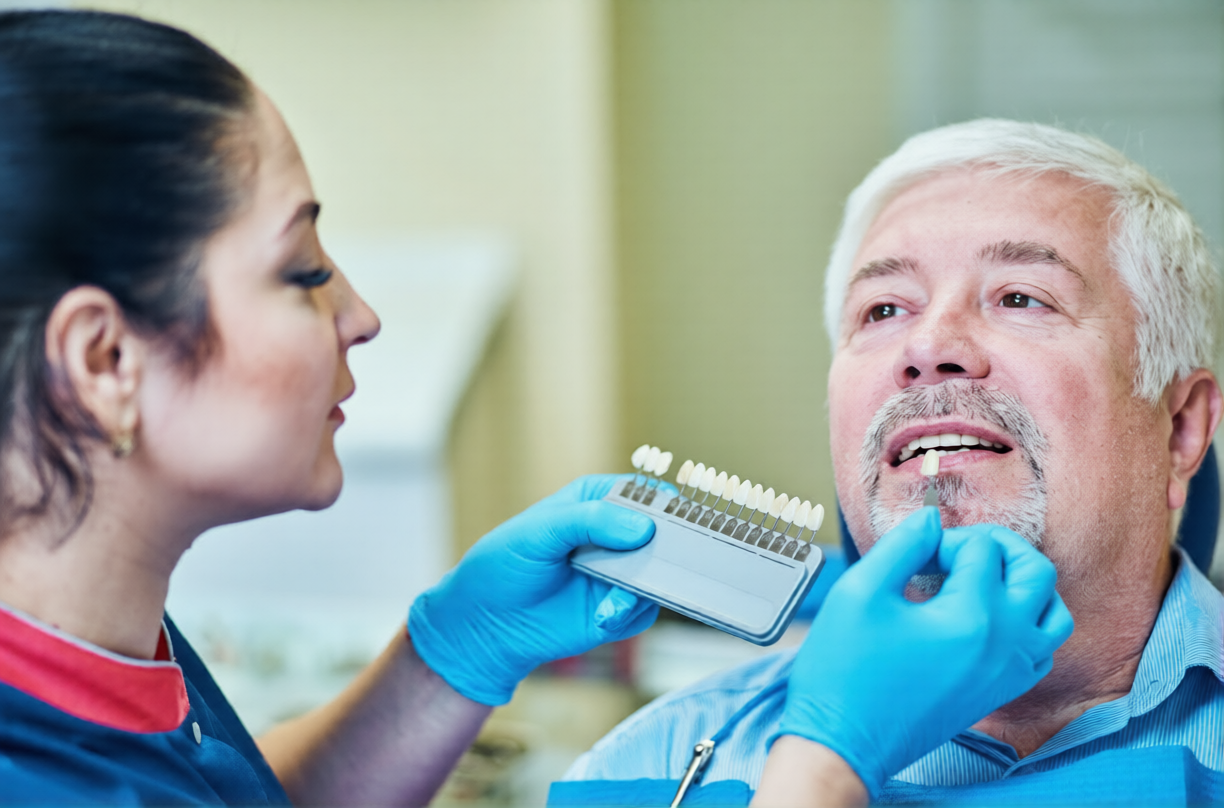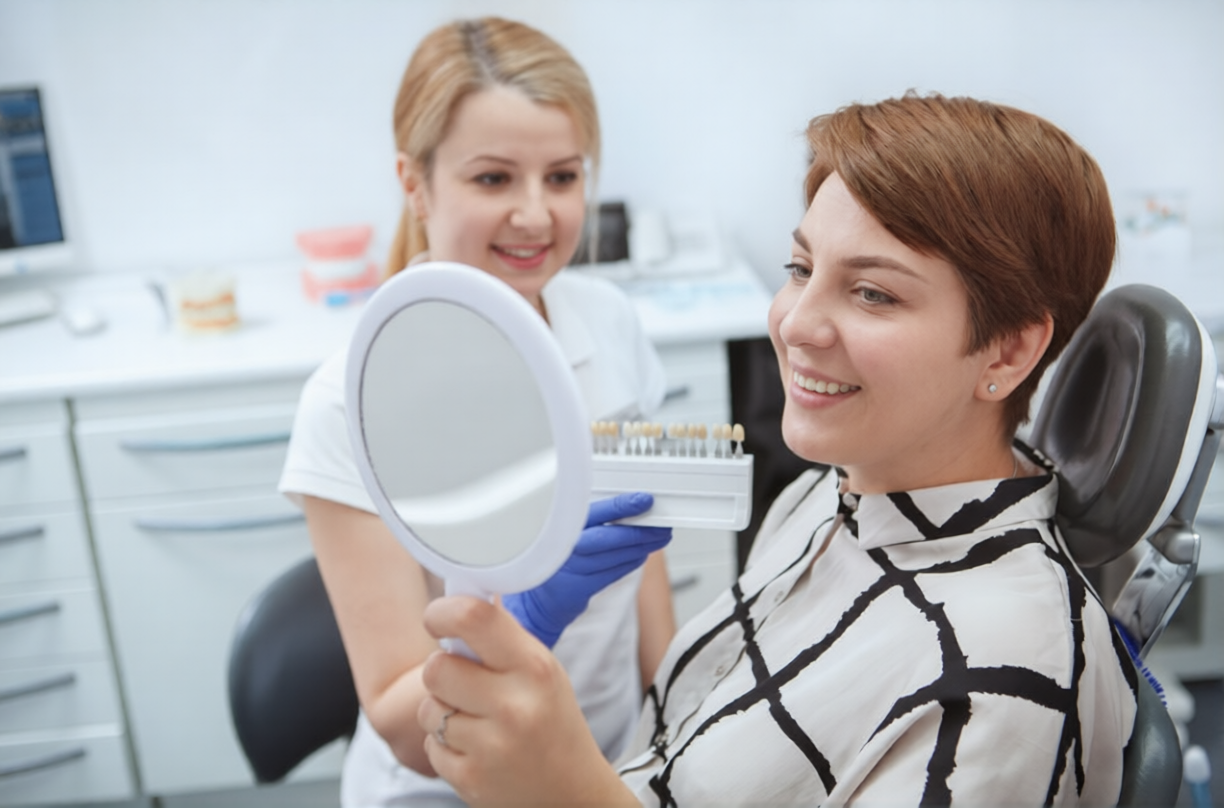
A good candidate for veneers has healthy gums, sufficient enamel, and cosmetic goals that veneers can realistically address. Porcelain veneers usually last 10–15 years; individual results vary. Active gum disease, severe bruxism, or insufficient enamel may disqualify you—clinical assessment determines suitability. Veneers carry risks discussed at the consultation. Before proceeding, seek a second opinion from an appropriately qualified health practitioner.
Summary of the Content:
- Good candidates have healthy teeth and gums, sufficient enamel for bonding, and realistic cosmetic goals. Veneers address staining, chips, minor gaps, and slightly uneven teeth—not severe misalignment or missing teeth.
- Active gum disease, severe bruxism, and insufficient enamel are common disqualifying factors. Many of these conditions can be managed, and patients may become suitable after treatment.
- Porcelain veneers last 10–15 years and require approximately 0.5 mm of enamel removal, which is irreversible. Composite veneers last 5–7 years, cost less, and generally require minimal preparation.
- Aconsultation at Willeri Dental Parkwood determines your individual suitability. The dentist examines your teeth, gums, enamel condition, and bite, then discusses whether veneers are appropriate for your case.
- Alternatives include dental bonding, teeth whitening, clear aligners, and crowns. Each suits different clinical circumstances—your dentist can advise which option aligns with your goals.
What Makes Someone a Good Candidate for Veneers?
A good candidate for veneers has three key qualities: healthy teeth and gums free from active disease, sufficient natural enamel to bond the veneer securely, and cosmetic goals that veneers can realistically address. These criteria form the foundation of clinical suitability. Meeting them does not mean veneers are automatically the right choice—individual assessment at consultation is required.
Dentists assess candidacy using the following criteria:
- No active tooth decay or gum disease:
Your teeth and gums must be in good health before veneer placement. - Sufficient enamel on the tooth surface:
Porcelain veneers require approximately 0.5 mm of enamel removal for bonding. - Realistic cosmetic goals:
Veneers address staining, chips, minor gaps, and slightly uneven teeth, not severe misalignment. - Stable bite and minimal grinding:
Excessive grinding (bruxism) increases the risk of veneer damage. - Commitment to oral hygiene:
Veneers require the same daily care as natural teeth to last long-term.
Do You Have Healthy Teeth and Gums?
Veneers must be bonded to healthy, intact tooth structure. Active decay weakens the bond and risks veneer failure. Any decay must be addressed before veneer placement can proceed.
Your gums should be firm, pink, and free from active gum disease. Inflamed or bleeding gums indicate underlying periodontal issues. Patients with existing gum disease may still be suitable after completing treatment—timing is key.
‘Healthy’ refers to structure, not appearance. Staining, chips, or minor cracks are exactly what veneers address. You do not need white or evenly shaped teeth to qualify. The concern is structural health, not appearance.
Is There Enough Enamel to Bond the Veneers?
Porcelain veneer preparation usually involves removing approximately 0.5 mm of enamel from the tooth surface. This process is irreversible. Sufficient natural enamel is required for the veneer to bond securely and last long-term.
Teeth with extensive existing fillings, fractures, or severely worn enamel may not be suitable. A crown may be more appropriate in these cases. Enamel sufficiency is assessed at the consultation—it cannot be self-assessed at home.
Composite veneers usually require minimal to no enamel removal. This makes them a more conservative option for patients concerned about tooth preparation. The dentist will discuss which type suits your enamel condition.
Are Your Cosmetic Goals Within What Veneers Can Address?
Veneers are designed to improve the appearance of otherwise healthy teeth. They can address:
- Staining that resists whitening treatments
- Chips and minor cracks
- Slightly uneven or misshapen teeth
- Small gaps between teeth
- Minor size or length discrepancies
Veneers cannot address severe crowding or bite misalignment—orthodontic treatment is required. They cannot replace missing teeth—implants or bridges are needed. Deep structural damage usually requires a crown, which provides greater support.
Realistic expectations are a key part of candidacy. Veneers improve tooth appearance, not replace other dental treatments. A consultation clarifies what veneers can achieve in your specific case.
When Are Veneers NOT the Right Choice?
Veneers are not suitable for patients with active gum disease, unaddressed tooth decay, severe bruxism, or insufficient enamel. These factors increase the risk of veneer failure or may mask worsening dental problems. Many disqualifying conditions are manageable—patients often become suitable after completing treatment. Not suitable now does not mean never suitable.
Active Gum Disease, Tooth Decay, or Weak Teeth
Veneers bonded over active decay or diseased gum tissue risk premature failure. The bond relies on healthy tooth structure. Decay weakens this foundation and may continue to progress beneath the veneer.
Inflamed or bleeding gums indicate active gum disease. Placing veneers over diseased tissue can worsen periodontal problems. Treatment should address the gum disease first, then reassess veneer suitability.
Teeth with large existing fillings covering the majority of the visible surface may be better served by a crown. Crowns provide more structural support for weakened teeth. The dentist will assess whether the remaining tooth structure is sufficient for veneer bonding.
These conditions are manageable. Patients are often suitable for veneers after completing restorative or periodontal treatment. It is a matter of timing, not long-term exclusion.
Teeth Grinding or Clenching (Bruxism)
Habitual teeth grinding places excessive force on veneers. This significantly increases the risk of chipping, cracking, or debonding. Porcelain is durable but can fracture under repeated high pressure.
Patients with mild or managed bruxism may still be considered. A custom night guard (occlusal splint) protects veneers during sleep. Many bruxism patients successfully wear veneers with this protective approach.
Unmanaged severe bruxism is a common reason dentists advise against veneer placement. The risk of damage may outweigh the benefit. The dentist will assess the severity and discuss management options during the consultation.
Severe Misalignment or Bite Problems
Veneers address cosmetic issues—they do not reposition teeth or manage bite problems. They change the appearance of the tooth surface, not the underlying alignment.
Severe crowding or bite problems (overbite, underbite, crossbite) usually require orthodontic treatment. Veneers placed over significantly misaligned teeth carry a higher risk of failure. Uneven force distribution can cause premature debonding or damage.
Minor misalignment is commonly addressed with veneers. The distinction between ‘minor’ and ‘severe’ is a clinical assessment made at consultation. Some patients benefit from clear aligner treatment first, followed by veneers after alignment is achieved.
The dentist will discuss whether your alignment concerns are within the scope that veneers can address. If not, alternative or sequential treatment may be recommended.
Porcelain vs Composite Veneers: Which Type Is Right for You?
Porcelain veneers can cost up to $2,036 per tooth and last 10–15 years, while composite veneers can cost up to $836 per tooth and last 5–7 years. The choice between the two depends on your cosmetic goals, budget, and how much natural tooth preparation you’re comfortable with. Both types improve tooth appearance—the difference lies in durability, cost, and the process.
| Factor | Porcelain Veneers | Composite Veneers |
| Material | Custom-made porcelain (ceramic) | Tooth-coloured composite resin |
| Appointments | 2–3 visits (lab fabrication required) | Typically 1 visit (applied directly) |
| Enamel preparation | ~0.5 mm removal (irreversible) | Minimal to none |
| Longevity | 10–15 years | 5–7 years |
| Cost per tooth | Up to $2,036* | Up to $836* |
| Stain resistance | High | Moderate |
| Restoration options | Cannot be reworked; replacement required | Can often be reworked or touched up |
| Suited for | Complex cosmetic changes, long-term option | Minor issues, budget-conscious patients |
*Based on Australian Dental Association data
Porcelain veneers are custom-made in a dental laboratory. They resist staining and closely mimic the translucency of natural enamel. The preparation is irreversible—once enamel is removed, the tooth will require a restoration for life.
Composite veneers are applied directly to your teeth and can often be completed in a single visit. They require less preparation, cost less, and are reversible in many cases. However, they are more prone to chipping and staining than porcelain and have a shorter lifespan.
Neither type responds to whitening treatments. If you plan to whiten your teeth, this should be done before veneer placement—the shade chosen at placement is long-term.
What Happens at a Veneer Consultation at Willeri Dental Parkwood?
A veneer consultation at Willeri Dental Parkwood involves a clinical examination of your teeth, gums, enamel condition, and bite alignment. The dentist discusses your cosmetic goals and assesses whether veneers are clinically suitable for your case. It is an informational session with no obligation to proceed—you receive advice, options, and a tailored treatment plan if appropriate.
What the Dentist Examines
During your consultation, the dentist will assess:
- Visual and clinical examination:
Your existing teeth, gum tissue, and bite alignment are examined to identify any underlying issues. - Dental X-rays (if indicated):
These may be taken to check for decay, root issues, or structural concerns not visible to the eye. - Enamel condition and volume:
This determines which veneer type is clinically appropriate; porcelain veneers require more preparation than composite. - Oral habits:
You’ll be asked about grinding, clenching, or nail biting, as these can affect veneer longevity and may require management like a night guard. - Cosmetic goals:
You describe what you’d like to change, and the dentist advises on what veneers can realistically achieve in your case. - Digital smile imaging:
Digital imaging may be used to preview potential results before any treatment begins.
What are the Possible Outcomes From the Consultation?
The consultation can lead to different outcomes depending on your individual assessment. Here are the three common scenarios:
- Outcome 1 – You are suitable for veneers:
The dentist discusses treatment options, the timeline, and costs. You decide whether to proceed—there is no pressure to commit at the consultation. - Outcome 2 – An existing dental issue is identified:
Decay or gum disease must be addressed first. The dentist outlines a treatment sequence, and veneers may be reconsidered after your oral health is restored. - Outcome 3 – Veneers are not recommended for your case:
The dentist presents alternative options such as dental bonding, teeth whitening, clear aligners, or crowns. Each option is explained based on your specific needs.
Your appointment is a clinical assessment and information session, not a commitment to treatment. Individual suitability varies. A clinical assessment is a reliable way to determine whether veneers are appropriate for your teeth.
What Are the Alternatives to Veneers?
If veneers aren’t suitable for your case, several alternatives may achieve your cosmetic goals. Teeth whitening addresses discolouration without altering tooth structure, dental bonding addresses minor chips and gaps at a lower cost, and clear aligners straighten misaligned teeth. The right option depends on your specific dental concerns and clinical circumstances.
Alternative Treatment Options
- Teeth whitening:
This is appropriate when discolouration is the only concern and teeth are otherwise structurally sound; it cannot address chips, gaps, or misshaping. - Dental bonding:
Composite resin is applied directly to the tooth; it is suitable for minor chips, gaps, and discolouration and is less durable than veneers but reversible. - Clear aligners:
These are appropriate when misalignment is the primary concern; they straighten teeth without altering their surface, and veneers can be placed after alignment if further refinement is needed. - Dental crowns:
These are recommended when a tooth has extensive damage, large existing fillings, or structural weakness; they are more invasive than veneers but provide greater cover and protection. - Dental contouring:
This involves minor reshaping of tooth edges; it is appropriate for small irregularities, has a lower cost, and requires no irreversible preparation.
Your dentist at Willeri Dental Parkwood will discuss which option suits your individual circumstances during your consultation.
Frequently Asked Questions
Here are answers to some common questions Perth patients ask about dental veneer suitability and the consultation process at Willeri Dental Parkwood.
How long do veneers last?
Porcelain veneers usually last 10–15 years with proper care, while composite veneers last 5–7 years. A 2021 systematic review by Alenezi et al., published in the Journal of Clinical Medicine, examined 25 clinical studies and reported a 10-year survival rate of 95.5% for porcelain laminate veneers. Individual outcomes depend on oral hygiene, bite forces, grinding habits, and bonding quality.
Several factors influence how long your veneers will last:
- Oral hygiene:
Regular brushing, flossing, and professional cleanings help prevent gum disease, which can compromise the veneer bond. - Bite forces:
Habits like teeth grinding, clenching, or chewing hard objects (ice, pens, fingernails) increase the risk of chipping or cracking. - Material type:
Porcelain is more durable and stain-resistant than composite resin, which is why it lasts longer. - Bonding quality:
Proper preparation and bonding technique at placement affect long-term durability.
Composite veneers may need replacement or touch-ups sooner than porcelain. They are more prone to staining and wear over time. However, they can often be reworked or refinished without full replacement.
Your dentist will advise on expected longevity based on your individual oral health, habits, and the type of veneer selected.
Can I get veneers if I grind my teeth?
Teeth grinding (bruxism) increases the risk of veneer damage, but does not automatically disqualify you. Patients with managed bruxism who use a custom night guard (occlusal splint) may still be suitable for veneers. The dentist assesses each case individually, considering the severity of grinding and your willingness to use protective measures.
Unmanaged severe bruxism places excessive force on veneers. This can cause chipping, cracking, or debonding over time. The force generated during grinding can exceed normal chewing pressure by several times.
If you grind your teeth, the dentist may recommend:
- Custom night guard:
A professionally made occlusal splint worn during sleep protects veneers from grinding forces and distributes pressure more evenly. - Addressing underlying causes:
Stress management, sleep position adjustment, or medication review may help reduce grinding frequency. - Material selection:
Porcelain veneers are more resistant to wear than composite, though both can be damaged by severe grinding. - Monitoring and management:
Regular check-ups allow the dentist to identify early signs of wear and adjust your night guard if needed.
Some patients with mild bruxism successfully wear veneers for many years with proper protection. Others with severe, unmanaged grinding may be advised to consider alternative treatments until the condition is better controlled.
A consultation at Willeri Dental Parkwood can assess your specific situation and determine whether veneers are appropriate with protective measures in place.
How much do veneers cost in Perth?
Based on Australian Dental Association fee data, porcelain veneers can cost up to $2,036 per tooth, while composite veneers can cost up to $836 per tooth. Costs vary based on the number of teeth involved, the type of veneer selected, and individual case complexity. A consultation provides a personalised cost estimate.
Here’s how these factors affect the total cost:
- Type of veneer:
Porcelain veneers require laboratory fabrication and multiple appointments, which increases cost compared to composite veneers applied directly at the chair. - Number of teeth:
Multiple teeth cost more than a single tooth; however, some clinics may offer different pricing structures for full-smile cases. - Case complexity:
Teeth requiring additional preparation, enamel recontouring, or preliminary work (such as gum disease management) may involve higher costs. - Location and practitioner experience:
Fees can vary between clinics and practitioners across Perth.
Veneers are classified as a major dental treatment under private health funds. They are not covered by Medicare, as they are considered elective cosmetic procedures. Your health fund benefit depends on your level of cover.
Willeri Dental Parkwood provides a detailed, personalised cost estimate during your consultation. This includes a breakdown of treatment stages, what is included, and your estimated out-of-pocket costs after any applicable health fund benefits.
Do I need to do anything to prepare my teeth before getting veneers?
You do not need to prepare your teeth at home before a veneer consultation. However, certain preparatory steps may be required before veneer placement, including addressing active tooth decay or gum disease, completing necessary general dental work, and finishing any teeth whitening (veneers cannot be whitened after placement, so this must be done beforehand).
Here’s why these preparatory steps may be needed:
- Treatment for active dental issues:
Tooth decay or gum disease can compromise the veneer bond and lead to complications. These conditions must be stable before veneers are placed to support long-term success. - General dental work:
Existing fillings or root canal treatment should be completed first because veneers are bonded to the prepared tooth surface. Unstable dental work underneath can affect veneer longevity. - Teeth whitening (if desired):
Veneers are colour-matched to your existing teeth at the time of placement, and veneer material does not respond to whitening products. Whitening beforehand allows you to achieve your desired shade across all teeth. - Orthodontic treatment (in some cases):
Significant misalignment may limit what veneers can achieve cosmetically; addressing alignment first allows veneers to focus on colour, shape, and surface refinement rather than compensating for position.
The consultation at Willeri Dental Parkwood will identify any preparatory steps needed for your individual case. Your dentist will create a treatment sequence that aims to prepare your teeth properly and support a healthy, long-lasting result.
Are dental veneers covered by health funds in Perth?
Dental veneers are classified as a cosmetic procedure and are not covered by Medicare. Private health funds with dental cover may contribute to the cost, subject to your policy’s annual limit, waiting period, and specific item cover. You should check with your health fund using the relevant item numbers before treatment begins.
Here’s what to do to find out if you’re covered:
- Check your level of cover:
Contact your health fund and confirm whether you have major dental cover included in your policy. Veneers fall under this category, and basic or general dental cover will not apply. - Ask about waiting periods:
Enquire whether you have served the waiting period for major dental (often 12 months); if you recently upgraded your cover or joined a fund, you may not be eligible to claim yet. - Request a benefit estimate:
Provide your fund with the relevant item numbers (your dentist can supply these) and ask for a written estimate of what benefit you would receive for veneer treatment. - Check your annual limit:
Ask how much of your annual dental benefit limit remains available. Veneers may use a significant portion of this, so you need to know your current balance. - Get it in writing:
Request written confirmation of your entitlements, including waiting periods served, benefit amounts, and any exclusions that may apply to your specific policy.
Patients are encouraged to confirm their specific entitlements directly with their health fund provider before treatment begins. Willeri Dental Parkwood can provide the relevant item numbers to assist with your enquiry.
Can I get veneers if my teeth are crooked?
Veneers can address minor misalignment cosmetically, but do not move or reposition teeth. If your misalignment is mild and primarily cosmetic (slightly uneven edges, minor rotation), veneers may be suitable. Moderate to severe misalignment or bite issues usually require orthodontic treatment first to achieve a functional result.
Here’s how alignment affects veneer suitability:
- Mild cosmetic misalignment:
Veneers can mask slightly uneven edges, minor rotations, or small gaps by reshaping the visible tooth surface. This creates the appearance of straighter teeth without moving them. - Moderate to severe misalignment:
Teeth that are significantly crooked, overlapping, or rotated require more tooth reduction to accommodate veneers, which weakens the tooth structure and increases the risk of premature veneer failure. - Bite issues:
If your misalignment affects how your upper and lower teeth meet, placing veneers without addressing the bite can create uneven force distribution. This leads to chipping, cracking, or debonding over time. - Orthodontics first, veneers second:
Many patients achieve functional and aesthetic results by straightening teeth with clear aligners first, then using veneers to refine colour, shape, or minor issues that remain after alignment.
Placing veneers over significantly misaligned teeth increases the risk of complications because the forces during chewing and biting are distributed unevenly across the veneer surface.
A consultation at Willeri Dental Parkwood will determine whether veneers are suitable for your specific alignment concerns or whether orthodontic treatment would be the more appropriate starting point.
Are dental veneers irreversible?
Porcelain veneer preparation is considered irreversible because a thin layer of enamel is removed from the tooth surface, and enamel does not regenerate. This means the tooth will require a restoration (veneer or crown) for the rest of its life. The irreversibility refers to the tooth preparation, not the veneer itself, which usually requires replacement after 10–15 years.
Here’s what irreversibility means for veneer treatment:
- Enamel removal cannot be undone:
During porcelain veneer preparation, approximately 0.5 mm of enamel is removed from the front surface of the tooth to create space for the veneer. Once removed, enamel cannot grow back, and the tooth will always need some form of covering. - Veneers require replacement over time:
Porcelain veneers usually last 10–15 years before requiring replacement, and composite veneers need replacement sooner. The original tooth preparation remains, but the restoration itself is renewed. - Composite veneers involve less preparation:
Composite veneers may involve minimal or no enamel removal in some cases, making them a more conservative and potentially reversible option. However, they are less durable than porcelain.
This distinction between irreversible preparation and renewable restoration is an important factor to discuss at your consultation before deciding to proceed. Your dentist at Willeri Dental Parkwood will explain exactly how much tooth preparation your case requires.
Will getting veneers hurt?
The veneer procedure is carried out under local anaesthetic, so patients often do not feel pain during treatment. Some sensitivity to hot and cold temperatures is common in the days following preparation, particularly with porcelain veneers, as a small amount of enamel has been removed. This sensitivity usually settles within a few days to a couple of weeks.
During the procedure:
- Pain during the procedure is usually minimal:
Local anaesthetic is used to minimise discomfort. The tooth and surrounding gum tissue are numbed before preparation begins, so many patients report little to no sharp pain during the procedure. - You may feel pressure and vibration:
Many patients report feeling pressure from instruments and vibration during tooth preparation, but no discomfort while the anaesthetic is active.
After the procedure:
- Porcelain veneers:
Because a thin layer of enamel is removed, the tooth may feel more sensitive to temperature changes for several days. This usually diminishes as the tooth adjusts to the veneer. - Composite veneers:
These involve minimal to no enamel removal and generally cause less post-procedure sensitivity. Many patients report little to no discomfort following placement. - Managing sensitivity:
Your dentist may recommend sensitivity toothpaste or temporary avoidance of very hot or cold foods during the adjustment period. Discomfort that persists beyond a couple of weeks should be reported to your dentist.
Patients should raise any concerns about sensitivity or discomfort at their consultation so the dentist can discuss what to expect for their specific case. Your dentist at Willeri Dental Parkwood will explain the level of preparation required and answer any questions about managing post-procedure sensitivity.
Final Thoughts
Veneer suitability depends on the condition of your teeth and gums, the presence of sufficient enamel, and realistic cosmetic goals. An assessment provides a clear picture of your options without any obligation to proceed. As with all dental procedures, veneers carry risks. Your dentist will discuss these with you during your consultation, including what to expect during preparation, how to care for your veneers, and any factors in your case that may affect longevity or outcomes.
Patients in Parkwood and the surrounding southern suburbs can contact Willeri Dental Parkwood to arrange a consultation. The consultation includes a thorough examination, discussion of your cosmetic concerns, and a personalised treatment plan tailored to your individual circumstances.
Ready to find out if veneers are clinically suitable for your teeth? Book a consultation with Dr Chopra at Willeri Dental Parkwood. Call the clinic or book online to arrange an appointment that works for your schedule.
Author Attribution:
Written by Dr Meheransh Chopra, Dentist – General Registration (AHPRA: DEN0001372159)
Dr Meheransh Chopra is a general dentist with more than 15 years of clinical experience. He completed his Bachelor of Dental Science at the University of Western Australia and is registered with AHPRA (DEN0001372159). Dr Chopra has a special interest in smile design, implants, and aesthetic dental procedures. He is a member of the Australian Dental Association. Outside of dentistry, he enjoys hiking, rock climbing, football, and motorbiking.